


Common Digitalisation Mistakes SMEs Make (and How to Avoid Them)
In today’s fast-changing business environment, digitalisation has become essential for small and medium-sized enterprises (SMEs) that want to remain competitive and resilient. While many SMEs are aware of the importance of digital tools, the transition from traditional to digital operations is not always smooth. Without a clear approach, businesses may face challenges that limit the impact of their efforts.
1/14/20262 min read
Within the EuroDigiVerse project, we have worked closely with SMEs across Europe and identified some of the most common digitalisation mistakes—and, more importantly, how to avoid them.
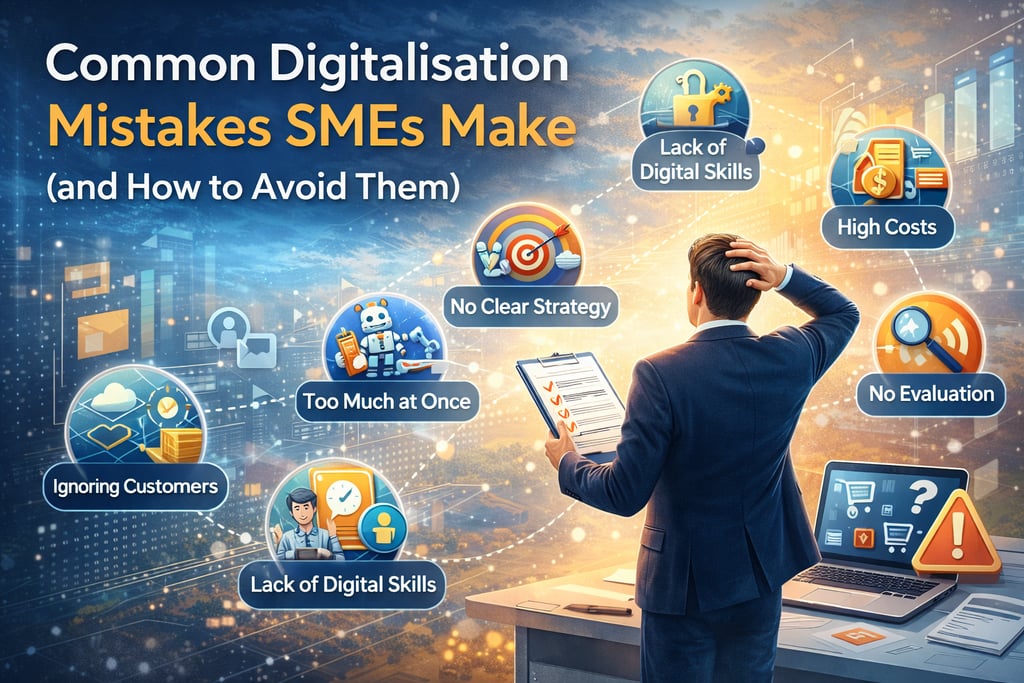
Adopting technology without a clear strategy
One of the most frequent mistakes is implementing digital tools without a clear purpose. Many SMEs adopt platforms or software simply because they are popular, without aligning them with their business goals.
How to avoid it: Start by defining clear objectives. Do you want to increase sales, improve customer communication, or optimise internal processes? Once your goals are clear, select tools that directly support them. A structured approach ensures that digitalisation leads to measurable results rather than confusion.
Trying to do everything at once
Digital transformation can feel overwhelming, especially for SMEs with limited time and resources. Attempting to implement multiple tools and systems simultaneously often leads to inefficiency and frustration.
How to avoid it: Take small, manageable steps. Begin with one or two tools that address your most urgent needs—for example, a CRM system or a social media platform. Gradual implementation allows your team to adapt and build confidence over time.
Underestimating the importance of digital skills
Technology alone does not guarantee success. If employees lack the necessary digital skills, even the best tools may remain underused or misapplied.
How to avoid it: Invest in training and continuous learning. Encourage your team to explore new tools, participate in workshops, and develop practical digital competences. Projects like EuroDigiVerse highlight the importance of equipping SMEs with accessible and relevant training resources.
Ignoring customer needs and behaviour
Some SMEs focus too much on internal processes and overlook how digitalisation can improve customer experience. As a result, their digital efforts may not meet market expectations.
How to avoid it: Place the customer at the centre of your digital strategy. Use digital tools to understand customer preferences, improve communication, and provide more personalised services. For example, maintaining an active online presence or offering easy online purchasing options can significantly enhance customer satisfaction.
Choosing overly complex or expensive solutions
Many businesses believe that digital transformation requires advanced and costly technologies. This can lead to unnecessary investments or tools that are too complicated for daily use.
How to avoid it: Focus on simple, user-friendly, and cost-effective solutions. Many powerful tools—such as Canva, Google Workspace, or basic AI applications—offer free or affordable versions that are perfectly suitable for SMEs.
Lack of evaluation and follow-up
Another common mistake is failing to measure the impact of digitalisation efforts. Without monitoring results, businesses cannot understand what works and what needs improvement.
How to avoid it: Define key performance indicators (KPIs) such as website traffic, sales growth, or customer engagement. Regularly review your progress and adjust your strategy accordingly. Digitalisation should be a continuous improvement process.
Digitalisation is not a one-time action, but a gradual and strategic journey. While challenges are common, they can be avoided with the right mindset, planning, and support.
Through initiatives like EuroDigiVerse, SMEs are empowered with the knowledge, tools, and skills needed to navigate this transition successfully. By avoiding common mistakes and focusing on practical, step-by-step implementation, businesses can unlock new opportunities, improve efficiency, and strengthen their position in the digital economy.
© 2025. All rights reserved.