

EuroDigiVerse Guidebook Now Available in Three Languages
We are excited to announce the publication of the EuroDigiVerse Guidebook, a new learning resource created as part of the EuroDigiVerse project. The guidebook is now available in three languages – English, Spanish, and Bulgarian – making it accessible to a wider audience of entrepreneurs, SME employees, and professionals across Europe.
8/27/20252 min read
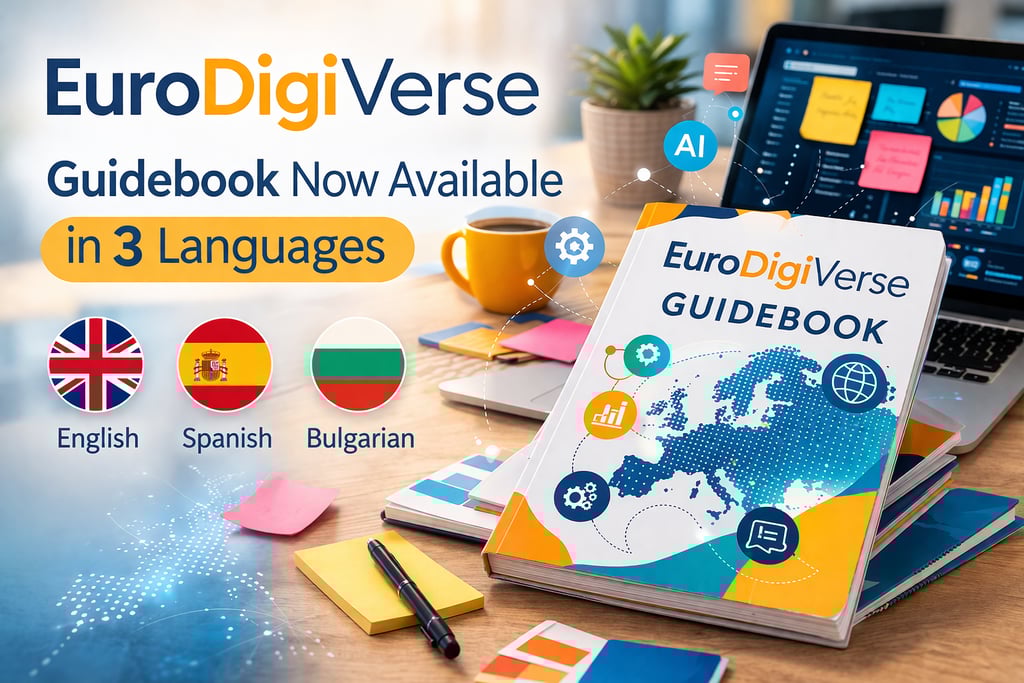
The guidebook is designed to help small and medium-sized enterprises (SMEs) strengthen their digital competences and adopt practical tools that improve productivity, communication, and business performance. In today’s rapidly evolving digital economy, SMEs often face challenges when trying to keep up with new technologies. Limited time, resources, and technical knowledge can make digital transformation difficult. The EuroDigiVerse Guidebook aims to bridge this gap by providing clear, practical, and beginner-friendly training materials that focus on real business needs.
The guidebook is structured into six practical modules, each focusing on essential digital skills that SMEs can immediately apply in their daily work.
The first module introduces AI tools for productivity. Participants learn how artificial intelligence can support everyday business tasks such as writing emails, generating content, preparing presentations, and analysing information. The module presents practical tools like AI assistants, meeting transcription platforms, and productivity applications that help businesses save time and work more efficiently.
The second module focuses on design and visual communication using Canva. Strong visual communication is essential for modern marketing and branding. This section teaches readers how to create professional graphics, social media posts, presentations, and printed materials without advanced design skills. It also introduces principles of good visual communication and collaboration in design.
The third module explores digital marketing essentials. SMEs learn how to build a simple digital marketing strategy, identify target audiences, and use tools such as email marketing platforms, Google Ads, and social media advertising. The module explains how to set measurable goals and evaluate marketing performance using key indicators.
The fourth module introduces website development basics. A professional website is a key asset for any business, and this section explains how to design, structure, and publish a simple website using beginner-friendly tools. It also demonstrates how artificial intelligence can support website content creation and optimisation.
The fifth module focuses on workplace communication and collaboration tools, specifically Microsoft Outlook and Microsoft Teams. Participants learn how to organise emails, manage calendars, schedule meetings, and collaborate efficiently with colleagues using shared digital workspaces.
Finally, the sixth module presents essential free digital tools that can support organisation and teamwork. Platforms such as Google Sheets, Google Drive, Trello, Miro, and Padlet are introduced as practical solutions for managing projects, organising data, and facilitating collaboration within teams.
The EuroDigiVerse Guidebook was developed through close cooperation between project partners and informed by feedback from SMEs in several European countries. This ensures that the training content reflects real challenges faced by businesses and provides practical solutions they can apply immediately.
By offering the guidebook in three languages, the EuroDigiVerse project aims to reach a wider European audience and support SMEs in developing the digital skills needed to remain competitive in the modern economy.
You can explore the guidebook and discover how digital tools can help your organisation work smarter, collaborate better, and grow in the digital age.
Here you can download the three different versions:
© 2025. All rights reserved.