


Five Essential Digital Skills Every SME Needs in 2026
As the digital economy continues to evolve, small and medium-sized enterprises (SMEs) must continuously adapt to remain competitive and resilient. Digital transformation is no longer just about adopting tools—it is about developing the right skills to use those tools effectively and strategically.
2/19/20262 min read
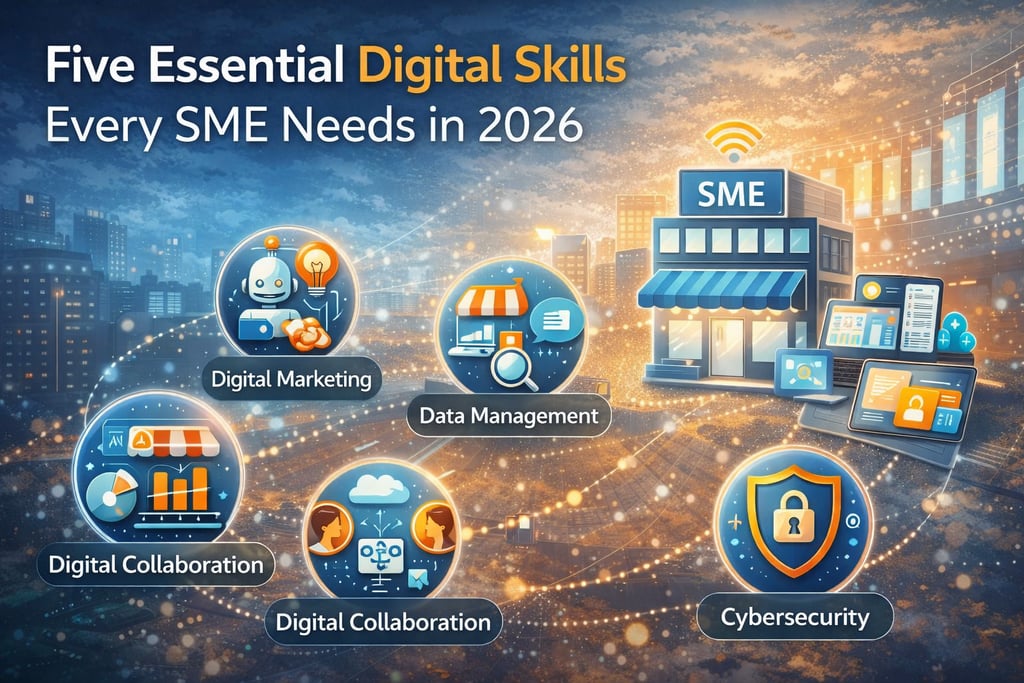
Within the EuroDigiVerse project, we have identified key areas where SMEs need to strengthen their competences in order to succeed in today’s and tomorrow’s business environment. Below are five essential digital skills that every SME should prioritise in 2026.
AI Literacy and Practical Use of AI Tools
Artificial intelligence is rapidly becoming part of everyday business operations. From content creation to customer support and data analysis, AI tools can significantly increase productivity.
SMEs need to understand not only what AI is, but also how to use it responsibly and effectively. This includes writing effective prompts, evaluating AI-generated content, and integrating tools like chatbots or AI assistants into daily workflows.
Why it matters: AI can automate repetitive tasks, save time, and support better decision-making—allowing SMEs to focus on strategic growth.
Digital Marketing and Online Presence
A strong online presence is essential for visibility and growth. SMEs must be able to promote their products and services through digital channels such as social media, email marketing, and search engines.
This skill includes creating engaging content, understanding target audiences, running basic advertising campaigns, and analysing performance metrics.
Why it matters: Digital marketing allows SMEs to reach wider audiences, compete with larger companies, and build lasting relationships with customers.
Data Management and Basic Analytics
Data is one of the most valuable assets for modern businesses. SMEs generate data every day—through sales, customer interactions, and online platforms—but often do not use it effectively.
Developing skills in organising, analysing, and interpreting data helps businesses make informed decisions. Even basic tools like spreadsheets or dashboards can provide valuable insights.
Why it matters: Better use of data leads to improved efficiency, smarter strategies, and a deeper understanding of customer behaviour.
Digital Collaboration and Communication
With the rise of remote and hybrid work, digital collaboration has become essential. SMEs need to use tools that support communication, teamwork, and project management.
This includes platforms such as cloud storage, shared documents, video conferencing, and team collaboration tools like Microsoft Teams or similar solutions.
Why it matters: Effective digital communication improves productivity, reduces misunderstandings, and enables flexible working environments.
Cybersecurity Awareness and Safe Digital Practices
As businesses become more digital, they also become more vulnerable to cyber threats. SMEs are often targeted due to limited security measures and lack of awareness.
Basic cybersecurity skills include using strong passwords, recognising phishing attempts, protecting sensitive data, and ensuring secure use of digital tools.
Why it matters: Protecting business and customer data is essential for trust, legal compliance, and long-term sustainability.
The future of SMEs depends not only on adopting digital tools, but on developing the skills to use them effectively. These five areas—AI, digital marketing, data, collaboration, and cybersecurity—form the foundation of a strong digital business.
Through initiatives like EuroDigiVerse, SMEs are supported in building these competences through practical training, accessible resources, and real-world applications. By investing in digital skills today, businesses can become more innovative, efficient, and prepared for the challenges of tomorrow.
© 2025. All rights reserved.