


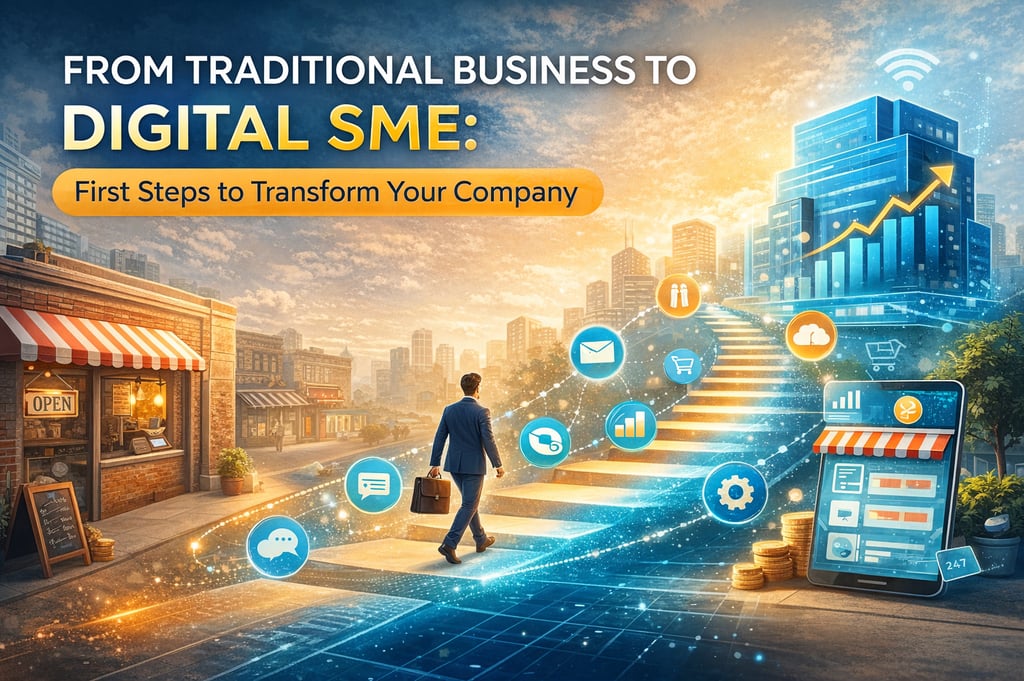
FROM TRADITIONAL BUSINESS TO DIGITAL SME: FIRST STEPS TO TRANSFORM YOUR COMPANY
In an increasingly digital world, small and medium-sized enterprises (SMEs) need to adapt in order to remain competitive. Digital transformation is no longer an option reserved for large corporations; it has become a key opportunity for SMEs to improve efficiency, expand their market reach, and provide better experiences for their customers. However, many traditional businesses are still unsure about how to begin this process. The good news is that digitalization does not necessarily require large investments or radical changes from the start. With a few strategic steps, any SME can begin its journey toward digital transformation.
10/29/20253 min read
In an increasingly digital world, small and medium-sized enterprises (SMEs) need to adapt in order to remain competitive. Digital transformation is no longer an option reserved for large corporations; it has become a key opportunity for SMEs to improve efficiency, expand their market reach, and provide better experiences for their customers. However, many traditional businesses are still unsure about how to begin this process. The good news is that digitalization does not necessarily require large investments or radical changes from the start. With a few strategic steps, any SME can begin its journey toward digital transformation.
First, it is essential to understand what digital transformation really means. It is not simply about using technology or creating social media profiles. Digital transformation involves integrating digital tools into different areas of the business in order to improve processes, communication, and decision-making. For many SMEs, this may involve managing customer information through digital tools, using online platforms to sell products or services, automating administrative tasks that were previously done manually, or analyzing data to better understand customer behavior and needs. The main goal is to work more efficiently and adapt to new market demands.
Before implementing new technological solutions, it is also important to assess the company’s current digital level. Analyzing the initial situation helps identify opportunities for improvement and define priorities. Some key questions can support this assessment, such as whether the company has an online presence through a website or social media, whether digital tools are used to manage customers or sales, whether employees possess basic digital skills, or whether internal processes are digitalized or still handled manually. This initial evaluation helps determine which areas of the business could benefit the most from digitalization.
Once the main needs have been identified, the next step is to start with basic digital tools. Many SMEs believe that digital transformation requires complex or expensive technologies, but simple solutions can already make a significant impact. Creating a professional website allows businesses to present their products or services to a wider audience, while the use of social media platforms helps promote the business and communicate directly with customers. In addition, e-commerce platforms provide the opportunity to sell online and expand the potential market. Customer relationship management (CRM) tools can help organize commercial information, and collaboration software can improve internal communication and teamwork. In many cases, these tools are accessible, intuitive, and relatively affordable.
Another essential aspect of this process is the development of digital skills. Technology is only truly effective when people know how to use it properly. For this reason, investing in digital skills within the company is crucial. SMEs can provide digital training for their employees, participate in training programs, or promote an organizational culture based on continuous learning. Encouraging the use of new tools in everyday tasks also helps teams become familiar with technology and integrate it naturally into their work. As digital skills improve, businesses become more flexible and better prepared to adapt to technological changes.
Finally, digitalization should be part of a clear business strategy. Adopting digital tools without proper planning may lead to confusion or limited results. Therefore, SMEs should define clear objectives, such as increasing online sales, improving communication with customers, or optimizing internal processes. It is also advisable to carefully select the digital tools that best suit the company’s needs, establish a training plan for employees, and define indicators to measure results. This approach ensures that digital transformation becomes a structured and sustainable process.
In conclusion, digital transformation may seem challenging for many traditional SMEs, but it also represents a significant opportunity for growth and innovation. With small steps, accessible tools, and a strong focus on developing digital skills, any business can modernize its operations and improve its competitiveness in today’s market. The path toward becoming a digital SME begins with one fundamental decision: being open to change and embracing the opportunities offered by technology.
© 2025. All rights reserved.